




UP NEXT
About MIEBO
HOW MIEBO WORKS
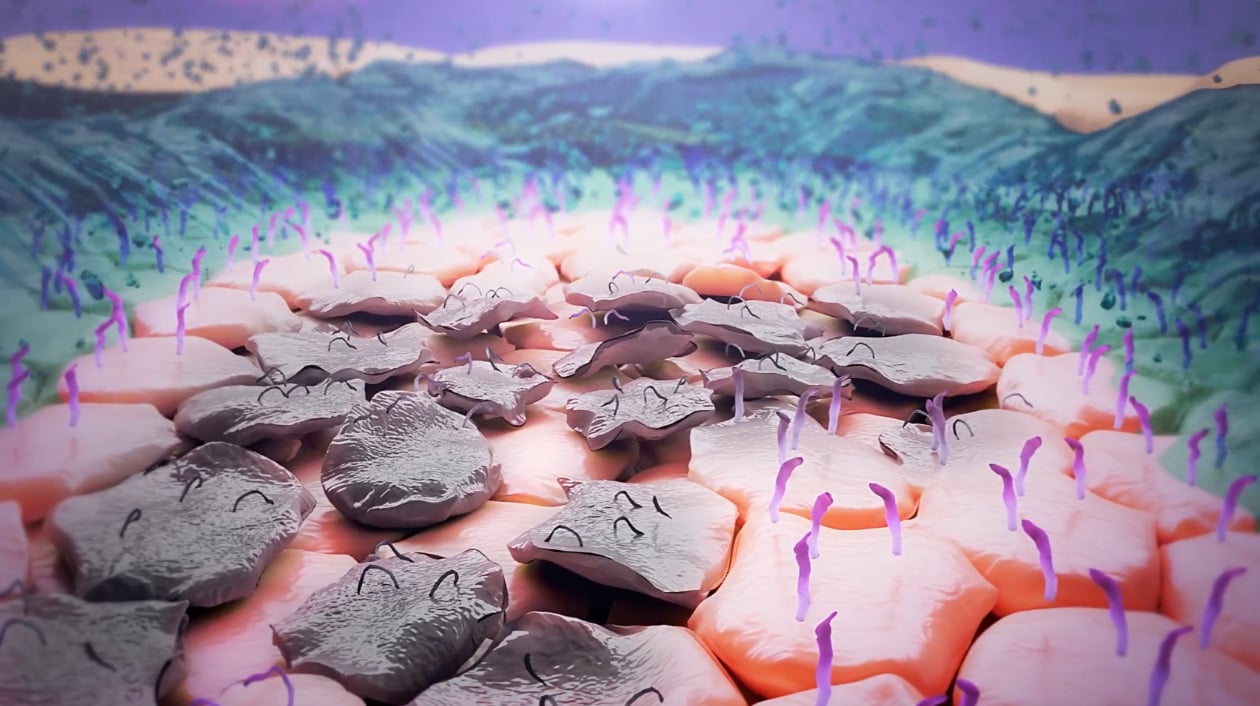
MIEBO spreads quickly and evenly to form a protective layer on the ocular surface, preventing tear evaporation1-5*

Mimics key functions of natural meibum and helps stabilize the tear film1-3,5,6*

Promotes healing on the ocular surface1,3*

May reduce friction7-9*
*The exact mechanism of action for MIEBO in DED is not known.1
-
Mimics key functions of natural meibum and helps stabilize the tear film1-3,5,6*
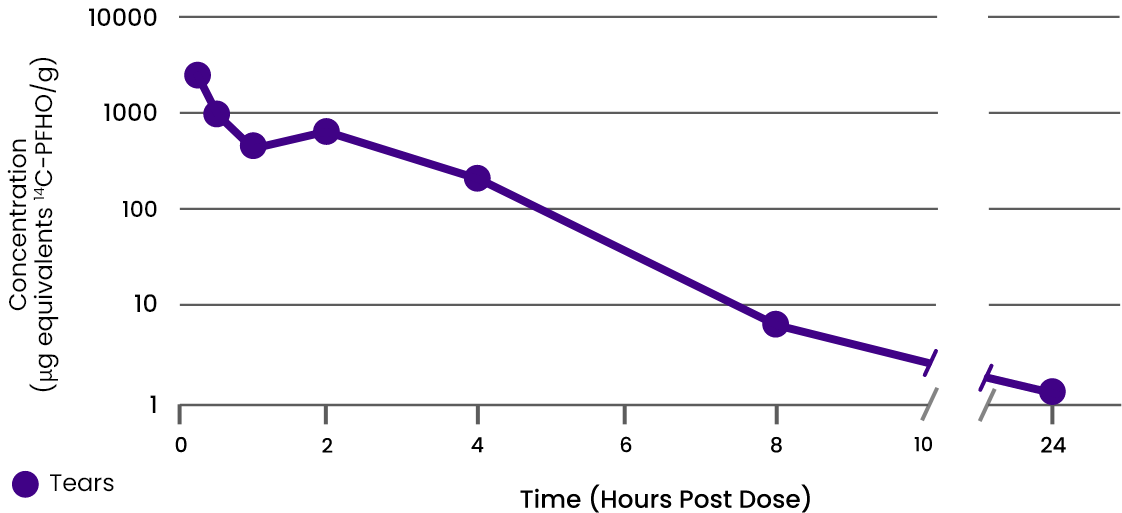
-
Promotes healing on the ocular surface1,3*
-
May reduce friction7-9*
*The exact mechanism of action
for MIEBO in DED is not known.1
HOW MIEBO WORKS
WATCH VIDEOUNIQUE FEATURES, GENTLE FORMULA1,7,8
MIEBO contains only ONE ingredient—not found in
any other Rx products for DED1
- Vehicle free
- Preservative free
- Steroid free
- Water free

The above animations are illustrative of a single drop of MIEBO or saline applied from identical pipettes to a glass eye model.5
‡Formulations containing water may have a brief residence time of 3-5 minutes on the ocular surface and a high surface tension that hinders spreading.5,11
SCIENCE OF MIEBO
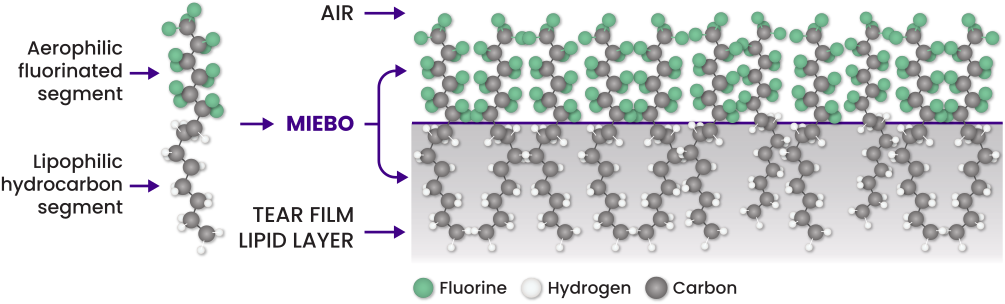
Only MIEBO forms a protective layer, supporting ocular surface homeostasis1-3,12*
Due to its unique structure, perfluorohexyloctane has dual affinity for air and lipids, forming a
monolayer at the air-liquid interface of the tear film.1,3,4,9
MIEBO is the ONLY Rx eye drop with preclinical data supporting evaporation inhibition3
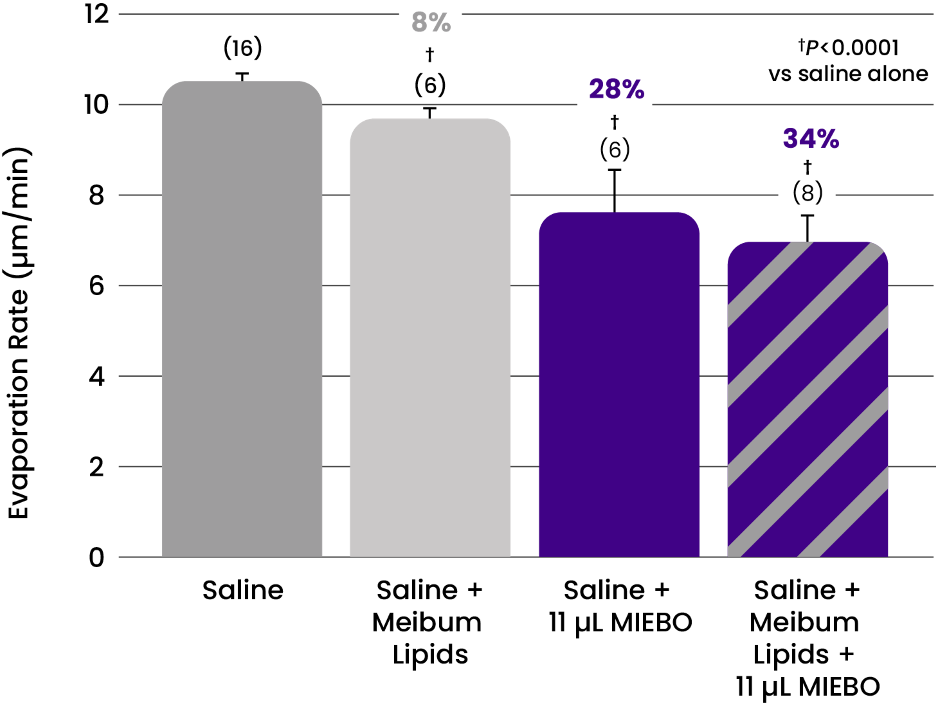
In an in vitro study, MIEBO inhibited evaporation more effectively than natural human meibum3
Mean Evaporation Rates of Saline With Meibum Lipids and/or MIEBO§
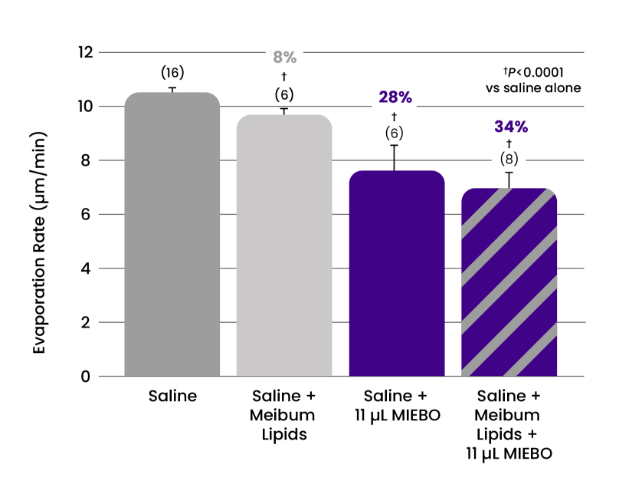
- there was no significant difference between the evaporation rate (Revap) of saline with only MIEBO layered on top compared with both meibum lipids and MIEBO layered on top (P>0.5).3
The clinical significance of this data has not been established.
![Droplet with callout: MIEBO was 4x MORE EFFECTIVE at inhibiting evaporation vs meibum lipids[2]](/siteassets/img/img-250x354-miebo-vs-meibum-callout.png)
Study design: The inhibitory effect of MIEBO vs meibum on the Revap of saline was evaluated in an in vitro model. Meibum lipids were collected from a single healthy volunteer. The Revap of saline was measured gravimetrically at 35 °C after layering either a single drop of MIEBO or the collected human meibum lipids to approximate the tear lipid layer in vivo over the top of 1 mL saline in a plastic container with a surface area approximating that of the human ocular surface. Evaporation rates are presented as standard error of the mean.3
§Percentage values are percent inhibition of the Revap of saline. Numbers in parentheses are the number of determinations. P values to test for significance were measured using the t test.3
The exact mechanism of action for MIEBO in DED is not known.1
In 2 in vitro studies, MIEBO inhibited evaporation more effectively than artificial tears3,13
Mean Evaporation Rates of Saline With Artificial Tears or MIEBO¶

- At 100 μL, MIEBO inhibited the evaporation rate of saline by 76%-81% (P<0.0001)3,13
- The addition of various artificial tear eye drops at 100 μL had no influence on the Revap of saline (P≥0.12 vs saline alone)3,13
The clinical significance of this data has not been established.
![Droplet with callout: MIEBO significantly INHIBITED THE EVAPORATION RATE of saline, unlike artificial tears[2]](/siteassets/img/img-150x200-miebo-vs-artificial-tears-callout.png)
Study design: The Revap of saline was measured following application of either MIEBO or different OTC artificial tears. The Revap was measured gravimetrically at 25 °C (Study 1) or at 35 °C (Study 2) using an analytical balance after layering 100 μL of MIEBO or artificial tears on the surface of 1 mL of saline in a container with a surface area similar to that of the human ocular surface. The evaporation rates are presented as mean (standard error of the mean). Results showed the Revap of saline was inhibited by 81% at 25 °C and by 76% at 35 °C when layering 100 μL MIEBO over saline while the evaluated artificial tears were without effect.3,13
¶Numbers in parentheses are the number of determinations. p values to test for significance vs saline alone were measured using the t test.3,13
All brand names and trademarks used herein are the property of their respective owners; Systane Ultra (Alcon, Fort Worth, Texas), Systane Balance (Alcon, Fort Worth, Texas), Soothe XP (Bausch + Lomb, Bridgewater, New Jersey), Systane Pro PF (Alcon, Fort Worth, Texas). No clinical efficacy is implied.
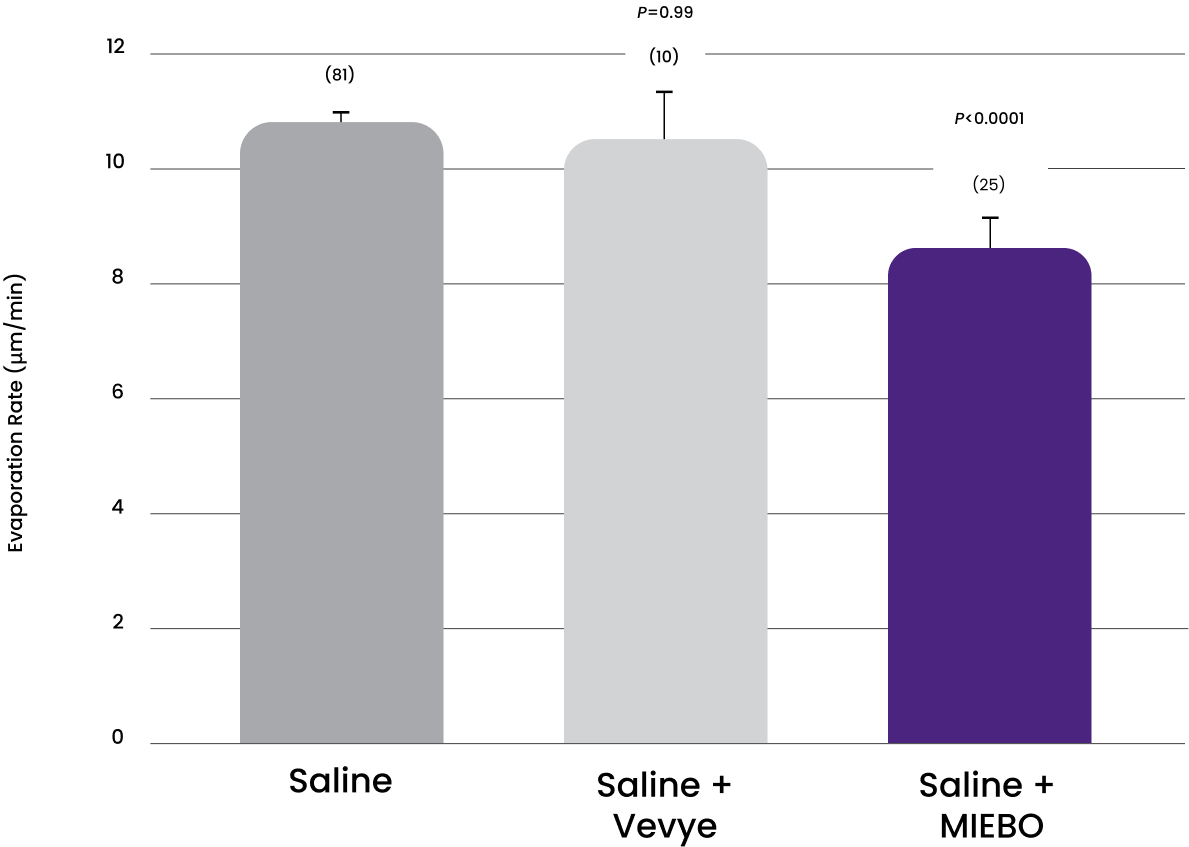
In an in vitro study, MIEBO inhibited evaporation more effectively than Vevye14
Evaporation Rates of Saline With 11 µL MIEBO or Vevye#
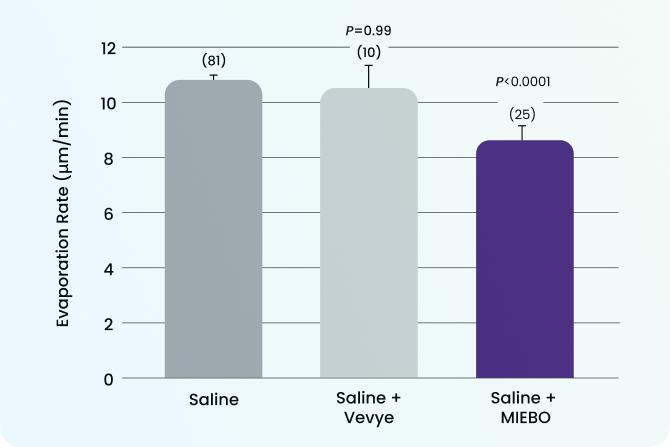
- A single drop of MIEBO significantly inhibited saline evaporation, while the same volume of Vevye did not14
The clinical significance of this data has not been established.
![Droplet with callout: MIEBO significantly INHIBITED THE EVAPORATION RATE of saline, unlike artificial tears[2]](/siteassets/img/img-250x354-miebo-vevye-callout.png)
Study design: To evaluate the effect of MIEBO or Vevye on the Revap of saline, 1 mL of saline was added to a container with a surface area similar to that of the human ocular surface. The Revap of saline alone or saline with 11 μL of the MIEBO or Vevye layered over top were evaluated gravimetrically at 35 °C. Total sample weight was recorded every 10 min over 100 min, and Revap was obtained from the slope of the best-fit line obtained by least squares linear regression analysis. 11 µL is equivalent to 1 drop of MIEBO when dosed on the eye.14
#Numbers in parentheses are the number of determinations. P values to test significance vs saline alone were measured using the t test.14
All brand names and trademarks used herein are the property of their respective owners; Vevye (Harrow, Inc., Nashville, TN). No clinical efficacy is implied.
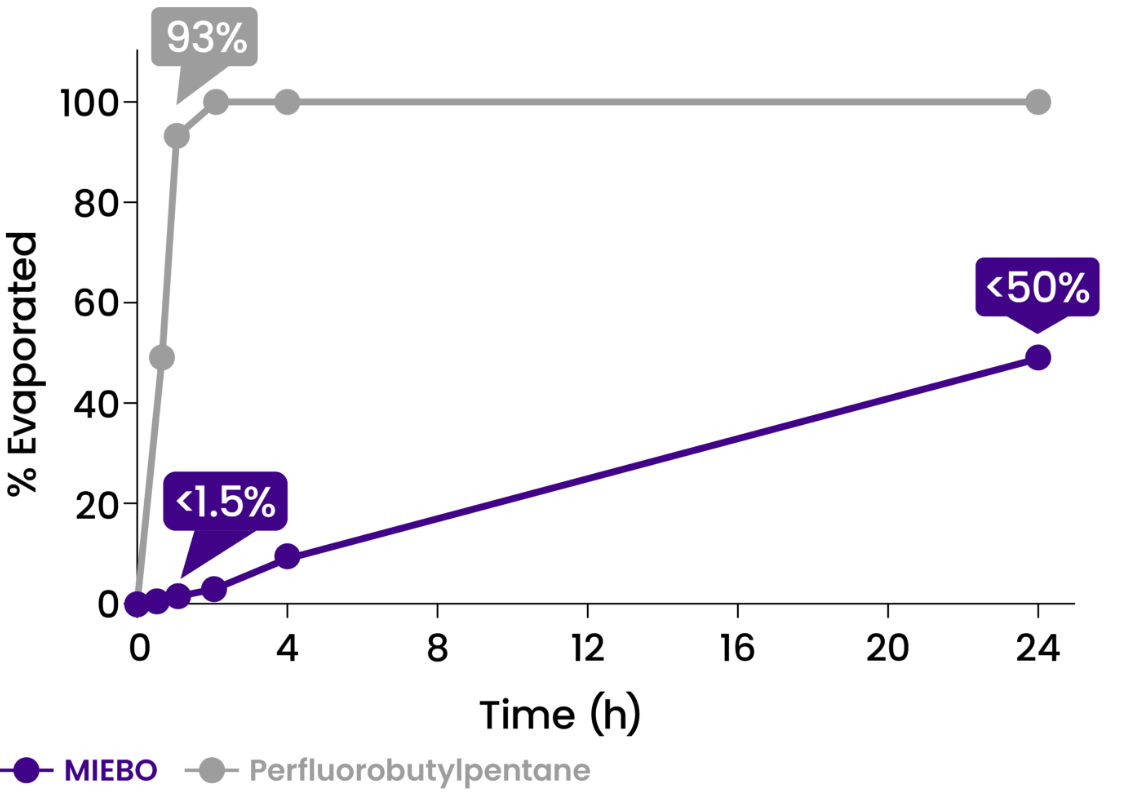
MIEBO has a slow rate of evaporation15
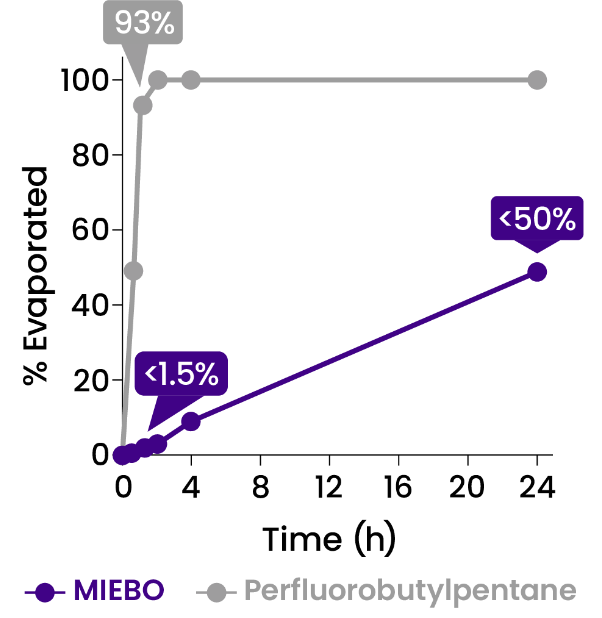
![Droplet with callout: <1.5% OF MIEBO EVAPORATED in 1 hour vs 93% with an SFA that has a shorter chain length[11]](/siteassets/img/img-150x200-miebo-vs-perfluorobutylpentane-callout.png)
Semifluorinated alkane (SFA) evaporation rate at physiological temperature in an in vitro gravimetric assay (n = 3; mean ± standard error of the mean).15
The clinical significance of this data has not been established.
Study design: The evaporation rate of MIEBO and perfluorobutylpentane was assessed gravimetrically by placing 500 μL in a preweighed tissue culture dish, which was then incubated at 35 ± 3 °C to mimic body temperature. The percentage of MIEBO and perfluorobutylpentane that evaporated per unit time was obtained by weighing the sample immediately after each addition and 0.5, 1, 2, 4, and 24 hours after incubation. All samples were tested in triplicate.15
MIEBO is the ONLY Rx eye drop for DED that directly targets tear evaporation1
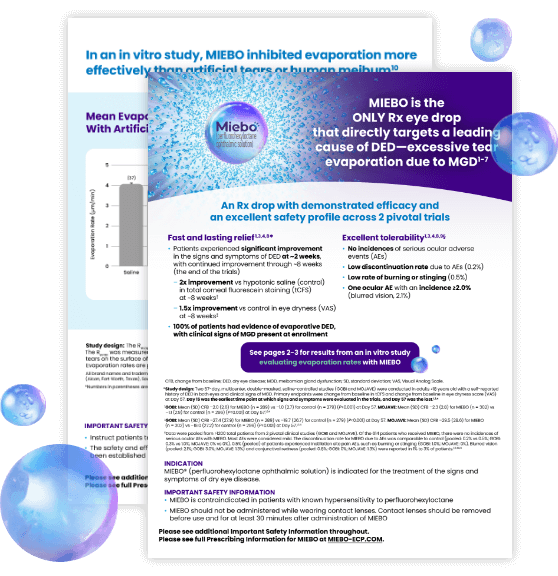
See MIEBO evaporation results from in vitro studies
Explore recommended videos about MIEBO


The MIEBO Difference With Dr. Marc Bloomenstein and Patient Rahnee

Eye to Eye: The MIEBO MOA
The MIEBO Difference With
Dr. Marc Bloomenstein and Patient Rahnee
Eye to Eye: The MIEBO MOA


INDICATION
MIEBO® (perfluorohexyloctane ophthalmic solution) is indicated for the treatment of the signs and symptoms of dry eye disease.
IMPORTANT SAFETY INFORMATION
- MIEBO is contraindicated in patients with known hypersensitivity to perfluorohexyloctane
- MIEBO should not be administered while wearing contact lenses. Contact lenses should be removed before use and for at least 30 minutes after administration of MIEBO
- Instruct patients to instill one drop of MIEBO into each eye four times daily
- The safety and efficacy in pediatric patients below the age of 18 have not been established
- In pivotal trials, the most common ocular adverse reaction was blurred vision (1% to 3% of patients reported blurred vision and conjunctival redness)
Click here for full Prescribing Information for MIEBO.
You are encouraged to report negative side effects of prescription drugs to the FDA. Visit www.fda.gov/medwatch or call 1-800-FDA-1088.
References: 1. MIEBO. Prescribing Information. Bausch & Lomb, Inc. 2. Sheppard JD, Nichols KK. Dry eye disease associated with meibomian gland dysfunction: focus on tear film characteristics and the therapeutic landscape. Ophthalmol Ther. 2023;12(3):1397-1418. doi:10.1007/s40123-023-00669-1 3. Vittitow J, Kissling R, DeCory H, Borchman D. In vitro inhibition of evaporation with perfluorohexyloctane, an eye drop for dry eye disease. Curr Ther Res Clin Exp. 2023;98:100704. doi:10.1016/j.curtheres.2023.100704 4. Meinert H, Roy T. Semifluorinated alkanes – a new class of compounds with outstanding properties for use in ophthalmology. Eur J Ophthalmol. 2000;10(3):189-197. doi:10.5301/EJO.2008.1838 5. Agarwal P, Khun D, Krösser S, et al. Preclinical studies evaluating the effect of semifluorinated alkanes on ocular surface and tear fluid dynamics. Ocul Surf. 2019;17(2):241-249. doi:10.1016/j.jtos.2019.02.010 6. Jones L, Craig JP, Markoulli M, et al. TFOS DEWS III management and therapy. Am J Ophthalmol. 2025;279:289-386. doi:10.1016/j.ajo.2025.05.039 7. Tauber J, Berdy GJ, Wirta DL, Krösser S, Vittitow JL; GOBI Study Group. NOV03 for dry eye disease associated with meibomian gland dysfunction: results of the randomized phase 3 GOBI study. Ophthalmology. 2023;130(5):516-524. doi:10.1016/j.ophtha.2022.12.021 8. Sheppard JD, Kurata F, Epitropoulos AT, Krösser S, Vittitow JL; MOJAVE Study Group. NOV03 for signs and symptoms of dry eye disease associated with meibomian gland dysfunction: the randomized phase 3 MOJAVE study. Am J Ophthalmol. 2023;252:265-274. doi:10.1016/j.ajo.2023.03.008 9. Schmidl D, Bata AM, Szegedi S, et al. Influence of perfluorohexyloctane eye drops on tear film thickness in patients with mild to moderate dry eye disease: a randomized controlled clinical trial. J Ocul Pharmacol Ther. 2020;36(3):154-161. doi:10.1089/jop.2019.0092 10. Krösser S, Grillenberger R, Eickhoff K, Korward J, Cavet ME, Mah FS. Ocular pharmacokinetics and biodistribution of perfluorohexyloctane after topical administration to rabbits. J Ocul Pharmacol Ther. 2025;41(7):370-377. doi:10.1089/jop.2025.0056 11. Ahmed S, Amin MM, Sayed S. Ocular drug delivery: a comprehensive review. AAPS PharmSciTech. 2023;24(2):66. doi:10.1208/s12249-023-02516-9 12. Sheppard JD, Evans DG, Protzko EE. A review of the first anti-evaporative prescription treatment for dry eye disease: perfluorohexyloctane ophthalmic solution. Am J Manag Care. 2023;29(suppl 14):S251-S259. doi:10.37765/ajmc.2023.89464 13. Data on file. Bausch & Lomb, Inc. 14. Cavet ME, Vittitow JL, Borchman D. Effect of increasing chain length on inhibition of evaporation by perfluoro compounds in an in vitro gravimetric assay. Exp Eye Res. 2026;264:110824. doi:10.1016/j.exer.2025.110824 15. Agarwal P, Scherer D, Günther B, Rupenthal ID. Semifluorinated alkane based systems for enhanced corneal penetration of poorly soluble drugs. Int J Pharm. 2018;538(1-2):119-129. doi:10.1016/j.ijpharm.2018.01.019

You are now leaving MIEBO-ECP.COM
You are now leaving the MIEBO ECP website and are going to a website that Bausch + Lomb does not operate and to which Bausch + Lomb’s Privacy Policy does not apply.
Bausch + Lomb is not responsible for the content, format, maintenance, or policies of the website you are about to visit and does not endorse or monitor any content on such website.


INDICATION AND IMPORTANT
SAFETY INFORMATION
INDICATION
MIEBO® (perfluorohexyloctane ophthalmic solution) is indicated for the treatment of the signs and symptoms of dry eye disease.
IMPORTANT SAFETY INFORMATION
- MIEBO is contraindicated in patients with known hypersensitivity to perfluorohexyloctane
- MIEBO should not be administered while wearing contact lenses. Contact lenses should be removed before use and for at least 30 minutes after administration of MIEBO
- Instruct patients to instill one drop of MIEBO into each eye four times daily
- The safety and efficacy in pediatric patients below the age of 18 have not been established
- In pivotal trials, the most common ocular adverse reaction was blurred vision (1% to 3% of patients reported blurred vision and conjunctival redness)
Click here for full Prescribing Information for MIEBO.
You are encouraged to report negative side effects of prescription drugs to the FDA. Visit www.fda.gov/medwatch or call 1-800-FDA-1088.
FAQs